
Last week, I was in Cannes for WalletCon 2026, a full day of panels, demos, and hard conversations about where crypto payments actually stand and what's still missing. Builders, PSPs, wallet teams, regulators, and infrastructure players, all in one room.
I work in product marketing at WalletConnect, so my lens is always predominantly on WalletConnect Pay, how it lands with real users, how the positioning holds up in conversation, and what signals tell us where the market is moving. Here are a couple of key takeaways that I would like to share.
300+ live transactions, and the UX improvements that made them possible
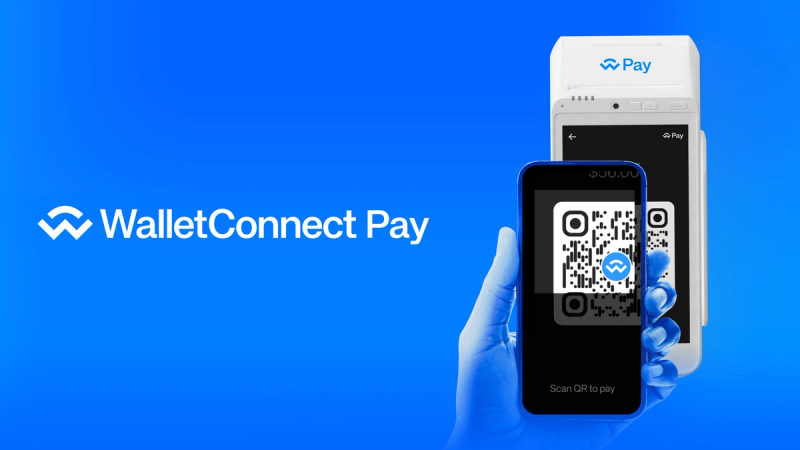
We ran WalletConnect Pay live at the event. Attendees could purchase merch, socks, shirts, hats, totes, and even a Trezor hardware wallet, all on Ingenico point-of-sale terminals. Any of the 700+ wallets on the WalletConnect network could be used to pay.
Over 300 successful transactions went through. But the number I care about more is the volume of feedback we collected from real users in a live setting.
Two UX improvements stood out to me personally. First, users no longer pay gas fees when they transact; WalletConnect Pay covers gas entirely. That single change removed one of the biggest friction points I've seen in previous demos. People weren't second-guessing whether they had enough ETH for gas on top of their purchase. They just paid.
Second, once a wallet connects, the payment screen now shows the exact assets the user can pay with. No guessing, no confusion about which tokens are supported. You connect, you see your options, you pay. That clarity made a noticeable difference in how quickly people completed transactions. Most people were left to do the full payment flow entirely on their own, and they finished without any prompting or handholding. That's a success signal. It means the experience is genuinely intuitive for users.
But the real highlight was watching people pay with wallets that already have the WalletConnect SDK integrated. Attendees who used Moneda and Opera Mini Pay got the full elevated experience, scan, pay, and done. No extra steps, no friction. It was undoubtedly the smoothest crypto payment experience in the market today. The reactions from people who saw it in action said it all; this is what they've been waiting for. My hope is that by the next WalletCon, many more wallets will deliver this level of experience.
We're already on the way. At WalletCon, we announced new wallet integrations with SafePal, Arculus, Privy, MiniPay, Utila, Interlnk, CoolWallet, D'CENT, Tangem, Turnkey, and Moneda, each bringing WalletConnect Pay to their users. That's hardware wallets, embedded wallet platforms, enterprise custody providers, and consumer wallets all joining the network. The more wallets that integrate, the closer we get to that scan-pay-done experience being the default everywhere.
These sound like small things. They're not. In payments, the difference between "almost works" and "just works" is everything. We wrote more on that inflection point in Stablecoin Payments Are Going Mainstream. WalletConnect Is Ready.
Tap to pay: the next unlock
Separately, attendees also got to test tap-to-pay — crypto payments via NFC, straight from a phone to a terminal.
Nacho Rivera, our Head of Product, did a live demo during the livestream. The crowd reaction post-demo was immediate — people were genuinely impressed. As Nacho put it in his presentation, this is a huge unlock — especially in regions like Europe where tap to pay is already the default. Consumers don't scan QR codes at checkout in Paris or Berlin. They tap. If crypto payments are going to feel native in those markets, they need to work the way people already pay.
That's exactly what tap to pay delivers. Same terminal, same gesture, different rails.
The industry moved faster than anyone expected
Jess Houlgrave, our CEO, opened with a reflection on how much has changed since the last WalletCon in Buenos Aires just five months ago — referencing billion-dollar acquisitions by traditional finance players, real traction in stablecoin adoption, and new transaction standards from Ethereum.
She kept it high-level, but to put her comments in context, here's what's happened since November:
- Mastercard acquired stablecoin infrastructure company BVNK for $1.8 billion.
- Ripple closed three deals totaling over $2.4 billion — including Hidden Road and GTreasury. Franklin Templeton launched a dedicated crypto division off the back of its 250 Digital acquisition.
- Total stablecoin supply crossed $315 billion by end of Q1.
- Vitalik Buterin announced EIP-8141 — Frame Transactions — bringing native account abstraction to Ethereum L1, which could fundamentally change how wallets authorize and execute payments.
This is not an exhaustive list. Five months. That's the pace now.
PSPs don't want a "crypto integration" — they want a payment integration
Riaz Bordie, our CTO, made the point that should be obvious but still gets missed: payment service providers aren't looking to build crypto expertise. They want a new payment method that plugs into their existing stack — compliance, settlement, reconciliation, reporting — through a single integration. The same way they'd add any alternative payment method.
That's exactly how WalletConnect Pay is built. One API. Fits into existing operational flows. No new compliance infrastructure needed from the PSP side. If you're evaluating what that looks like in practice, How to Accept Crypto and Stablecoin Payments lays it out in full.
Stablecoin infrastructure is maturing from all directions
Circle talked about moving up and down the stack, from settlement layer (their new ARC L1) to developer tooling to consumer-facing products. Stellar's team reinforced that payments-first chains with compliance baked into the protocol are gaining traction. SG Forge made the case for Euro-denominated stablecoins as settlement infrastructure, not just products. TON laid out their Telegram distribution channel, nearly $200 million already paid out to developers and channel holders.
Stablecoin infrastructure is no longer experimental. Multiple teams are building production-grade rails, and they're all converging on the same end state — programmable money that fits into regulated payment flows. These are the rails WalletConnect Pay is built to work with — and the more mature they get, the more payment methods we can support. For a broader look at how the ecosystem is evolving, see WalletConnect: The Infrastructure Behind Crypto Payments.
Regulation isn't the obstacle — it's the unlock
A panel on regulation featuring Chris Murrer, our Chief Legal and Strategy Officer, tackled the question head-on: can crypto payments scale inside regulated frameworks?
Jess and Chris previewed a paper they're releasing on self-custody in a regulated world — arguing that the old binary of "DeFi vs. TradFi" is collapsing. Regulatory clarity, especially in Europe and parts of Asia, is giving institutional players the confidence to move. That convergence is already visible in the partnerships and conversations happening at events like this one.
AI agents are coming for wallets — and that's a design problem
One of the more provocative sessions covered AI and wallet infrastructure. The argument: wallets as standalone apps may dissolve into the backend within months, replaced by AI agents that manage keys, sign transactions, and interact with onchain services on behalf of users.
That's not a distant scenario. It means wallet security, key management, and agent authentication need to be designed for now — not later. For WalletConnect, this is directly relevant — our SDK already sits between apps and wallets, and that's exactly the layer agents will need to interact with.
The WalletConnect network keeps growing
700+ wallets in the ecosystem. Over 1,000 participants actively staking in the DAO, with more than 35 million tokens staked. The WalletConnect Certified program continues to set a quality bar for wallet security, UX, and compliance readiness.
What this all mean
WalletCon wasn't a product launch event. It was a signal that institutional attention is moving toward production-grade payment infrastructure, built on stablecoin rails, distributed through wallets, and governed by communities with real skin in the game.
PSPs are engaged. Stablecoin infrastructure is maturing. Regulatory frameworks are taking shape. And real users are testing real products — 300+ transactions at a time, with feedback that's already shaping what we build next.
If you're new to how all the pieces fit together, What Are Crypto Payments? is a good place to start.
I came to Cannes to see how WalletConnect Pay holds up in the real world. It held up. Now we make it better.