
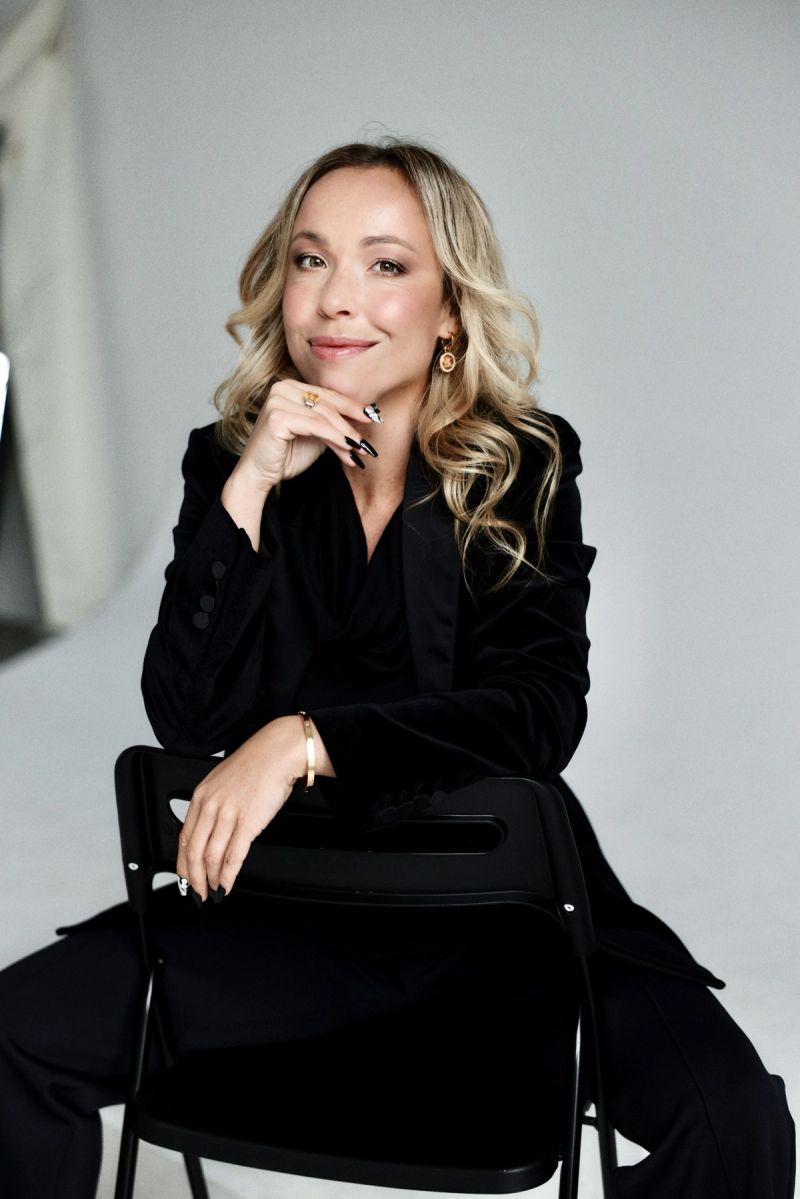
Tristan Thompson needs little introduction. The NBA star turned investor and entrepreneur has spent years building a career on and off the court, and in recent years he's become a familiar face in crypto. What pulled him in wasn't hype alone.
Coming from a background where financial literacy was rarely a priority, and from a sports world where athletes often have to trust a complete stranger with their money, he wanted to understand finance on his own terms.
Dayana Aleksandrova sat down with Tristan for an episode of the WalletConnect Pulse, WalletConnect's talk show on the digital asset economy and modern money movements.
He talks about the memecoin era that first caught his attention, how the space has changed since, and the projects he's working on now, including his board role at the data center company Palomino Labs and his role as global ambassador for Dubai Basketball.
In this episode, Tristan explains why the tourists have left but the builders have stayed, why prediction markets are giving people a voice again, why founders should keep crypto under the hood and lead with the product, and why his boldest prediction for the next one to two years starts with Bitcoin at $250,000 and ends with people taking back control of their finances.
Full Transcript
Dayana: Welcome to the WalletConnect Pulse, our talk show where we discuss the digital asset economy and modern money movements. Today with us, we have a very special guest who frankly needs little to no introduction. You may know him from his career in the NBA. You may know him from his work in crypto. Please welcome to the show, Tristan Thompson.
Tristan: Appreciate that. Thank you for having me.
Dayana: So Tristan, there's so much about you that people can Google, that they can find online. You were a millionaire when you were 19 years old, you've done so much. My question is, how did you gain an interest in crypto? What got you in the space in the first place?
Tristan: I've always been an investor. For myself, I've always been into finance and money, coming from a community where financial literacy is at the bottom in terms of importance. And just being an athlete, I think that's one area we aren't really taught. We basically have to trust a complete stranger to manage that for us. Of course, I think it's important to focus on your craft and be the best at your craft.
But giving someone too much control of anything in life puts you in a weaker position. So I've always educated myself. With crypto, especially during the meme coin era, I was just sitting on X and seeing PnLs that were off the charts and never made sense, because I'm coming from a Web2 background and traditional finance, where a great exit for an investment is a 10x or a 5x, right?
So seeing guys turn a thousand dollars into a hundred grand, or two hundred grand, or a million dollars, I'm like, wait, what is going on in this space? What am I not seeing? And I just started to dive in and educate myself.
Dayana: That is so relatable, and I'm sure so many people watching this episode will be like, my god, he's just like us. And as an entrepreneur and someone who's been working your whole life, what is the best advice you would give to someone who's young and hungry to succeed?
Tristan: I think it's developing a routine. Before you can put yourself in any position to be successful, you need a routine, but also you need to be true to yourself and understand your strengths and weaknesses. And with society right now, you're seeing it, whether it's Alexandr Wang talking about Scale AI or a young lady creating a fashion line, this is a time where, especially with AI becoming such a big thing, human creativity is where you should double down.
If you really believe in something and have a thesis, don't let people steer you away from that, because some of the best inventions and companies were developed on a cocktail napkin.
Dayana: That's such good advice, and that's absolutely true. Now more than ever, we have to lean into our humanity. How have you seen the space change since the moment you joined, with the crazy PnLs, to today, where we talk about AI a lot and crypto has kind of matured? How do you feel the space has changed in your experience?
Tristan: It's changed so much. When I first got into the space, there were a lot of young people in their early twenties, people who had probably never had a real job, either in high school or in college, kind of in that eighteen to twenty-five range.
But now when I'm going to these conferences and having conversations, I'm sitting beside bankers and sovereign funds. It used to be all DJs. Now you're seeing suits and ties, which shows you that the tourists have left, but the builders have stayed.
Dayana: Absolutely. I think if Mert heard you say the word "tourist," he would be so happy.
Tristan: Mert's my boy. Mert's my guy. Shout out Mert, fellow Canadian as well. He's good people.
Dayana: Shout-out. And what are some exciting projects you're personally working on right now?
Tristan: For me right now, I've joined the board of a company called Palomino Labs. This is not crypto, this is more in the data center space. Everyone knows how big data centers are, and this is where a lot of venture capital and family offices are trying to get exposure, because the reality, Dayana, is that as long as we're on these electronic devices, whether our cellphones, iPads, and so on, this information has to sit somewhere.
At Palomino Labs, what we're doing is creating micro LED channels, which lessen the amount of electricity and water you use to operate these data centers.
In America, but really all over the globe, everyone's trying to figure out technology that will help us save on water and electricity, because at the end of the day, those are resources we have to be very careful with, since we're exerting a lot. Like anything, there's always a potential for things to run low, which means price increases. So what we're doing there is a great thing.
That's the data center side, but there's also a sports side, because you can never forget sports. Listen, I've got Muhammad Ali in my background, it's still in my blood. I've also taken on the role and responsibility of being a global ambassador for Dubai Basketball, which is about helping basketball grow in the UAE region. I think it has a lot of similarities with me being from Toronto and Canada, a region and city that's on the up and coming in terms of growth.
And I think sports is the one area where you can unite people from all different walks of life to sit together somewhere and share the same belief and excitement, which is basketball, or live sports.
Dayana: Both really cool projects, and I think the first one, Palomino Labs, shows you're looking at the big picture. While people are sitting at home scrolling on X and seeing meme coins and all that, you're thinking big, you're thinking resources, you're thinking the tech behind the tech. We've been following along on your Instagram, and the project you have in Dubai looks awesome. Dubai is a place that is so on the ball, literally and figuratively, with what's developing, so it's a really cool place for you to be an ambassador for basketball. We'll stay tuned for that.
If we think about technology and pop culture, one thing that dominates the news cycle heavily is prediction markets, and that could be sports, politics, or pop culture. Have you personally used any prediction markets? Have you predicted anything? Have you been successful?
Tristan: Listen, prediction markets have been a great thing. We have two winners right now that are leading the space, Kalshi and Polymarket, and both have great founders. Shayne, the founder of Polymarket, is a good friend of mine. And Tarek, another great, successful guy, I really tip my hat to the success he and his co-founder have had. But yes, I've definitely dabbled in prediction markets.
What I love about it is that a community can come together and create a marketplace that can deliver accurate information. Think about the election: Polymarket was able to predict Donald Trump winning before CNN and Fox News could publicly tell us the winner. That shows you the power of a community coming together. And I think it's still early. There's still room to onboard more people.
The cool thing about these prediction markets is that it doesn't have to be the big headline pools, like the elections or sports. It can come down to the mid markets, like who will be the valedictorian at a high school with five thousand students.
That's creating a pool with a lot of volume and a lot of opportunity. And on the sports side, I think it's helped increase fan engagement, because people get exposure to these events in a pool that's psychologically easy to engage with.
You're seeing 75 cents for a win or a loss, compared to having to go to the old-school sportsbooks, which are very intimidating and, to be honest, very archaic. I'm so glad prediction markets have come in. I think it's given people a voice again.
Dayana: That's such a cool way to put it. There are so many things people say about prediction markets, but the lens of community and giving people a voice is accurate, in my opinion, and a really positive way to see it. And as someone who's existed in the mainstream media and pop culture for such a long time, what do you think we need to do as a crypto industry to be accepted as an everyday technology?
Tristan: This is what I say on stage, whether I'm speaking at Token2049, Binance Blockchain Week, or Web Summit. The first thing I tell founders is: what are you making? Don't lead with your project saying "this is a crypto platform." Just tell us what it is. Give us great technology and a great piece of business.
I always like to use a comparison to Uber. I don't care if it's run by AWS or run by a cloud. As long as when I pick my phone up and put in my pickup location and my destination, I get from A to B safely, I don't care what's under the hood. Crypto is the same thing.
Push more about what the product does and what it's delivering than leading with crypto. Keep crypto and blockchain technology under the hood, develop great products for the everyday person, and that's how you're going to continue to onboard a more mainstream audience.
Dayana: That's crypto marketing summarized in 30 seconds. Every marketer in crypto is trying to get this into the heads of founders, and it's absolutely true, we're so on the same page. Now, this is our last question. Give us your boldest prediction for the future of crypto and fintech in the next one to two years.
Tristan: Bitcoin at $250,000. And then obviously everything else will rise. So I say BTC at 250K. I also really see that people lose trust in the traditional banking system, especially in America, with the bond markets being very high.
I feel you're going to see a lot of people pull out of these old-school, archaic institutions and onboard onto on-chain platforms, the Aaves of the world, or even a CEX or a DEX where they're providing yield.
People are going to go on-chain for their yields rather than trusting a money market that gives you 4%, and then when you pull your money out you get taxed and penalized, and you're only walking away with less than 1%.
I'm sitting on Aerodrome and Meteora right now, LPing, and on a crazy day I'm doing 0.5 to 1% a day. So why would I give my money to the bank? Take out the middleman, be more in control of your finances. We work too hard to give someone else the key to this beautiful Ferrari.
Dayana: Exactly. And this is such a beautiful way to bring it full circle. You started your career in crypto because you wanted more control, and now we have that control at our fingertips. That's a very bullish prognosis for the next one to two years, and I really hope it comes true. Tristan, thank you so much for being a guest on the show.
Tristan: Thanks so much for having me. I really appreciate it. Glad you make this work.