
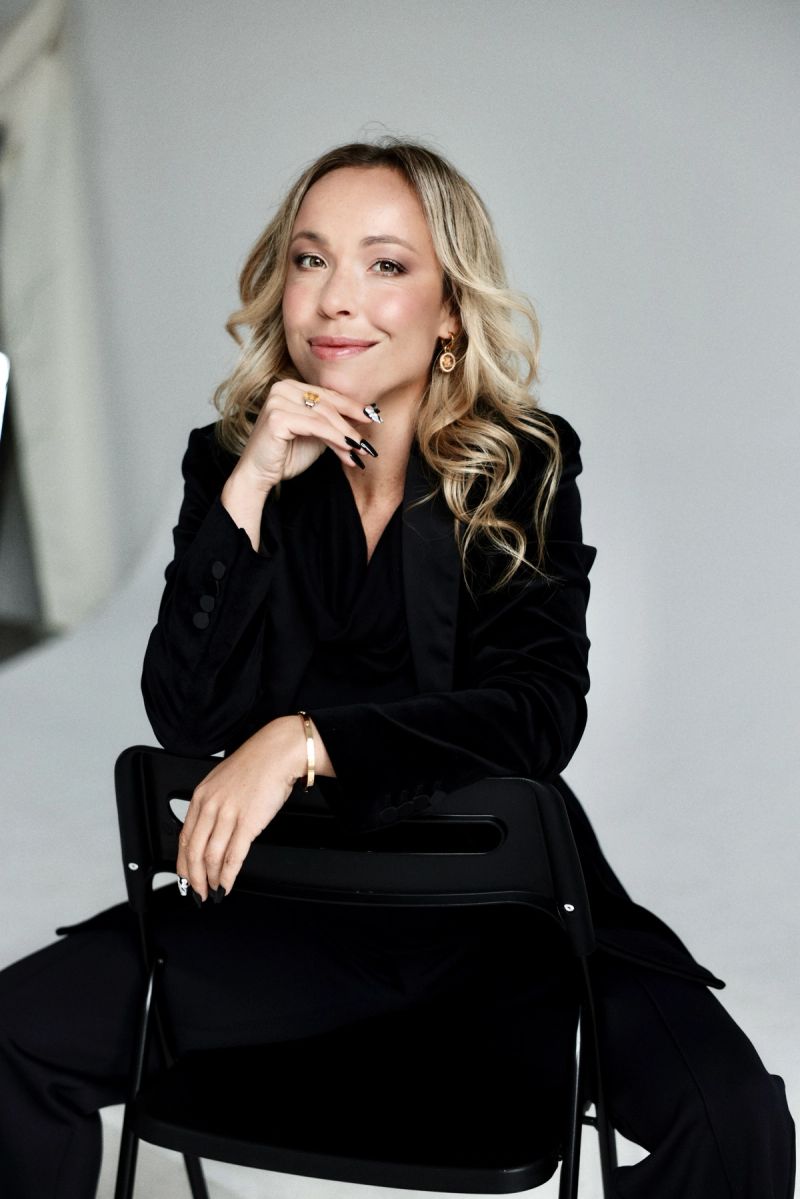
Kyle Jenke got into crypto by watching traditional payment rails strain from the inside. His vantage point as the Chief Business Officer at Optimism, gives him a clear read on where stablecoins actually create value.
Dayana Aleksandrova sat down with Kyle at Money20/20 in Amsterdam for an episode of Payments Pulse, WalletConnect's talk show on the convergence of traditional and digital finance. Optimism sits at the center of a growing enterprise chain ecosystem, with 50 companies including OKX, Kraken, Coinbase, Upbit, and BitPanda running production chains on the OP Stack.
In this episode, Kyle breaks down why most consumers don't need to know they're using stablecoins at all, why large enterprises are increasingly choosing to build their own infrastructure rather than rent someone else's, how the US regulatory outlook is shaping enterprise decision-making in 2026, and why tokenized financial products are moving onto public blockchains.
Full Transcript
Dayana Aleksandrova: Welcome to the Payments Pulse, WalletConnect's talk show where we discuss anything traditional finance, digital finance, and payments. We're here with Kyle Jenke, the Chief Business Officer at Optimism, right here on the ground at Money20/20. Kyle, welcome to the show. Please tell us a bit about your background.
Kyle Jenke: Great to be here, thank you. So I was previously at Adyen, one of the largest payments companies in the world, and I saw a lot of the challenges that traditional payment rails had, and that got me more interested in crypto. Through there I got introduced to Optimism, where I was actually an advisor for two years before coming on as Chief Business Officer.
Dayana Aleksandrova: That's so cool. So you've been bullish on payments, you've been into payments for a long time before it got hot, so to say, because now we walk the floor of Money20/20 and everything is payments, agentic payments, stablecoins. You were onto it before, which will make for a really good conversation. Let's dive right in.
Our first question: stablecoins now handle trillions in annual volume, yet most consumers have never really spent one. What do you think is the biggest barrier when it comes to stablecoins becoming a true everyday payment method, just like fiat is?
Kyle Jenke: Yeah, it's a good question. When you say most consumers haven't spent one, I'd say that's describing most consumers in the US. But more globally, a lot of consumers have. If you look at the Latin America market, stablecoins are very frequently spent by consumers. One of our partners, Celo, who's built on Optimism, has an incredibly thriving payments business down there. That said, I actually think it's okay if consumers don't think they're spending stablecoins, and instead it's just in the background powering a lot of the infrastructure.
A good example is another partner, Etherfi. They have over 300,000 users and a great credit card product that's stablecoin-backed. That doesn't put stablecoins at the front — instead it puts a physical card, which is what the user is familiar with. It's just backed by stablecoins that run on top of Optimism. We think that's a beautiful use case for consumers.
Dayana Aleksandrova: Completely agree. So in other words, you don't have to see how the sausage is made to enjoy your hot dogs.
Kyle Jenke: Yeah, I like that. I don't think you want to see how the sausage is made.
Dayana Aleksandrova: I don't think so either. Our second question is about infrastructure. When we think about payment rails, where do you think they still fail, and how can we possibly fix that?
Kyle Jenke: Most large enterprises have a decision to make around the blockchain they want to run on. The big decision is: do I want to run on someone else's infrastructure, or do I want to build my own?
In some use cases it makes sense to run on someone else's. But we think for the largest institutions, particularly in payments, building your own infrastructure makes sense, for three reasons.
Number one, you want to be able to differentiate your product, and to do that you need to customize the underlying infrastructure. Number two, you want to own the economics — if you're paying rent to someone else, those economics aren't accruing to you, especially in payments.
And number three is privacy, compliance, and security. When you own your own infrastructure, you're in charge of those. You can implement the compliance, privacy, and security that make sense for your business, versus when you're paying rent to someone else's blockchain, you're dependent on them — you need to get them on the phone if there's a security incident. So we think a lot of these large enterprises will end up owning their own infrastructure for those reasons, and we think those three reasons are where a lot of the industry is actually coming up short today.
Dayana Aleksandrova: That reminds me of "not your keys, not your crypto" — not your blockchain, not your infrastructure. You can't control these things. Privacy is another big topic we've been discussing lately, and it's gaining more speed. I think that's a really good answer, which leads us to our next question. Regulatory clarity is finally coming to the US, to Europe, to some parts of Asia. If you had to pick one big development in regulation that has made people optimistic and given actual clarity, what would it be?
Kyle Jenke: Yeah, I think the expectation that the CLARITY Act will pass, roughly in a month or so, has given a lot of the customers we talk with a lot of confidence and enthusiasm for actually making decisions this year and turning POCs or ideas into actual business lines in their companies. To put it in context, globally we're talking right now to 215 different large enterprises, 78 in Europe specifically, since we're here right now, and they're enthusiastic. They're bullish on the regulatory environment. If you look here in Europe, you've got MiCA and DORA — they're a little bit ahead of us in the US.
And if we turn to Asia, Korea and Japan are moving forward, but looking to the US for some guidance. I think as clarity passes in the US, that will roll into Japan and Korea as well. So I think 2026 is setting up to be an incredibly positive year from a regulatory standpoint, which we think will serve as a catalyst for the industry.
Dayana Aleksandrova: I hope so too. I'll intend upon an optimistic 2026. So, cross-border payments is often considered one of the key use cases for stablecoins, but in your opinion, what other key use cases are there? It can't just be cross-border. What comes to mind?
Kyle Jenke: Yeah, cross-border payments is a great use case. Payouts is another great one — you actually saw Facebook launch that earlier this year, with payouts to creators in the Philippines and Thailand, I believe.
That's another great use case. And then I think the most powerful is when stablecoins sit behind the front end of a product, like the Etherfi example, where they're powering those credit cards in the background. We think that's the ultimate use case — we think that's where you'll see the biggest adoption. Another example where it sits behind the scenes is interbank transfers.
If you've got money in New York and need it in Hong Kong Monday morning, with stablecoins you can send it at 7:59 AM and it arrives at 7:59 AM. So that's another example where it sits in the background but powers a lot of really important work.
Dayana Aleksandrova: And that is so key. If you look at banking and money ten years ago, all those delays, especially with long-distance transfers — I used to work at Bank of America, and it would take days on days. And now it's just instant, and it's cheaper too, most of the time.
So that's a really great example. Where do you see stablecoin finance evolving in the next one to three years? Give us your best guess — I know no one can really tell.
Kyle Jenke: Yeah, I think you're going to see the back end of a lot of financial products being replaced by stablecoins. Like we talked about earlier, I don't think the consumer will really even care that that's happening most of the time.
But that will allow these companies to deliver differentiated product experiences, reach more customers than they can today, and innovate and build more quickly. These things are all ultimately good for the consumer. And on the infrastructure side, we're going to see customization of that infrastructure to suit the stablecoin needs of the end customer.
Dayana Aleksandrova: I hope to see that future. Now we have two Optimism-specific questions. The first: what role does Optimism plan to play in the future of the on-chain economy?
Kyle Jenke: Yeah, we're actually playing a pretty big role today. There are 50 enterprises who have built a chain on top of Optimism — companies like OKX, Kraken, Coinbase, Upbit, BitPanda here in Europe — and they're working in production today. We did six billion transactions last year across the OP Stack, and our customers generated $450 million of revenue on their OP Stacks.
So we're playing a big role today. In the future, we hope that's an even larger role. Today, about 15% of all crypto transactions flow through Optimism. In the future, we hope that's an even larger percentage of the market share.
Dayana Aleksandrova: Accelerate — I love that. And our final question: talk to us about tokenized financial and payment products. Why are they increasingly operating on public blockchain infrastructure?
Kyle Jenke: Yeah, so a lot of these started on private infrastructure, which is okay. But we think ultimately, when you operate on public blockchain infrastructure, it's better for the end user. It allows them to do things like borrow and lend against those assets, and ultimately what's best for the consumer is going to be best for your customers.
So it allows these companies to build differentiated products and earn more fees on them. And lastly, while things like compliance and privacy have been a concern in the past, we have the solutions now — we have the compliance solutions that are needed, we have the privacy solutions that are needed. So we see it moving onto these public blockchains with the controls that large financial institutions are looking for.
Dayana Aleksandrova: Best of both worlds. Kyle, thank you so much for being a guest on the show.
Kyle Jenke: Thanks for having me.