
The promise of stablecoins has been talked about for years. Faster payments. Lower fees. No intermediaries eating into margins. Money that moves across borders in seconds instead of days. On paper, it sounds like an obvious upgrade to a financial system that hasn't fundamentally changed in decades.
And yet, for all the excitement, stablecoins have not broken into the mainstream. Not for consumers making everyday purchases. Not for merchants who need certainty, compliance, and clean reconciliation. Not for the CFOs and finance teams who need reporting that fits inside their existing workflows. The rails exist. The technology works. So what's actually been holding adoption back?
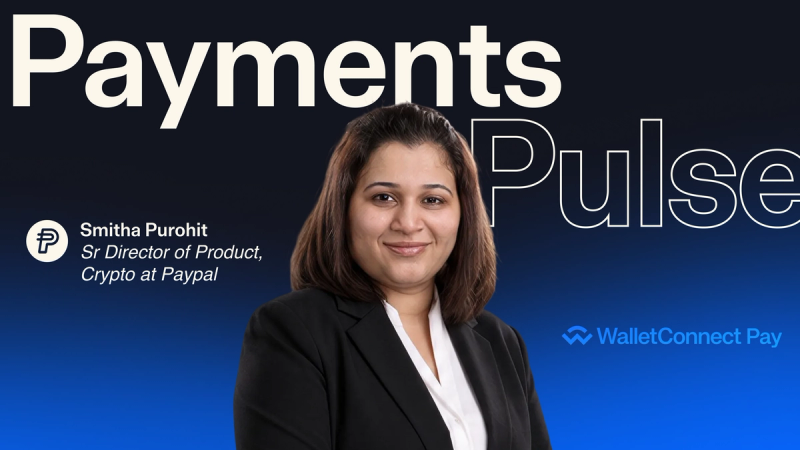
That's exactly what this episode of the Payments Bulls digs into. Our guest is Smitha Purohit, Head of Crypto at PayPal — one of the most recognisable and trusted payment brands on the planet, and the company behind PYUSD, its fully backed, regulated stablecoin. Smitha came up as an engineer before moving into product management, and she's been a crypto native long before it was a job title — still holding her Bored Ape, still watching the space evolve.
In this conversation with host Dayana Aleksandrova, Smitha lays out the four things she believes are genuinely missing from stablecoin adoption — trust, merchant cost, user experience, and settlement infrastructure — and explains why all four need to be solved simultaneously, not one at a time. She also makes the case for why PayPal's dual-sided network of hundreds of millions of consumers and millions of merchants is the real moat, and why PYUSD's compliance-first design isn't a constraint on composability but the very thing that makes scale possible.
The conversation also covers WalletConnect Pay — a recently announced integration that makes PYUSD transactable across any WalletConnect-enabled wallet, reaching a network of 750+ wallets through a single integration. For Smitha, it's the clearest proof yet that the vision of invisible, programmable, globally settled payments is no longer theoretical. It's the infrastructure that is live today.
Transcript:
Dayana Aleksandrova: Welcome to a brand new episode of the Payments Bulls, a WalletConnect show where we talk all things payments — from payment rails to traditional finance, digital finance, and the convergence of the two. Today with us, we have a very special guest. She is the Head of Crypto at PayPal. Her name is Smitha Purohit. Smitha, welcome to the show.
Smitha Purohit: Thank you so much for having me.
Dayana Aleksandrova: Pleasure to have you with us. Now you have a big job — you work for one of the most recognisable payment networks in the world. But tell us, what were you doing before and how did you find your way to PayPal and to PYUSD?
Smitha Purohit: Yeah, I've had a very interesting career trajectory. I'm actually an engineer — I did computer science engineering and used to code myself. But over time I realised that I enjoy working with people instead of coding in front of a computer. So I went and did an MBA in organisational behaviour, people motivation, and how people think and act. After that I did some program management and then moved into product management at PayPal. I've been a crypto native for a very long time. I have my own Bored Ape — I still have my Bored Ape, I still have my CryptoPunk, although the value is so low right now. But I've been at the centre of the whole crypto evolution and I'm so excited to be part of this journey and making stablecoins and crypto more mainstream.
Dayana Aleksandrova: I love that — and I know there will be at least a few holders of the NFTs you mentioned who'll know you're an OG. Now, we talk about stablecoins a whole lot. You cannot go to a conference and not talk about stablecoins anymore. The concept of fast payments and lower fees is incredible. However, why do you think it is that stablecoins have not yet become real money — for institutions, merchants, and truly consumers globally? What's the missing piece?
Smitha Purohit: Honestly, I think there are four things missing. And they all need to be solved together, because fixing one without the other just moves the bottleneck somewhere else. The first thing is trust. When a payment fails, people need to know that someone has their back. PayPal as a brand is entirely built on that promise. Crypto historically has not had any of that. What PYUSD does is change that equation — it's a trusted stablecoin by a trusted company, and our consumer protection and merchant protection infrastructure is behind every transaction. The second is merchant cost. Every new rail is a new integration — separate engineering, separate legal, separate reconciliation. Companies like PayPal and WalletConnect are solving that with a single integration that opens up to several wallets in the network. The third is user experience. Asking consumers to bridge assets, approve contracts, or switch apps kills adoption. WalletConnect and PayPal help remove that friction. No extra steps, no extra bridging — it feels like something you've done before. And the last one, which nobody really talks about but every CFO cares deeply about, is reporting and settlement. Balance checks, proper routing, compliance screening, settlement — all managed end to end without merchants having to rebuild their flows. All four together, in a single integrated stack, is what turns stablecoin trading into real flows and real money.
Dayana Aleksandrova: I love each of these four points. And one of them is that PayPal is a known, regulated, trusted company — which I fully agree with, I've used PayPal since around 2010. So, what was the problem you were trying to solve with PYUSD from day one? Why did you feel there was a need to create it?
Smitha Purohit: The core problem is actually very simple, but super hard to solve. Money today still moves very slowly. It costs way too much. And it doesn't travel well across borders. This is not a crypto problem — this is a payments problem that has existed for decades. A small business owner in Mexico has to wait three to five days for their US payment to come in. A freelancer in the Philippines loses seven to eight percent in FX fees before it even hits their wallet. A family sending remittance home watches a huge chunk disappear in fees. All of this is slow, expensive, and opaque. PYUSD was built to answer that — faster, cheaper, better rails. On-chain settlement in seconds, not days. Programmable money, backed by the dollar, so the volatility that made crypto impractical is removed. But beyond the rails, PayPal changes the equation because we have hundreds of millions of consumers and millions of merchants already connected on both sides of the transaction. That dual-sided network is everything in payments — and that's what PYUSD inherits.
Dayana Aleksandrova: That takes me back to my own days as a freelancer collecting payments through PayPal. You touched on composability earlier — on one hand, stablecoins are programmable and you can do a lot with them. On the other hand, if something goes wrong in a fully crypto transaction, there's no one you can call. How does PayPal reconcile the two with PYUSD?
Smitha Purohit: The real tension isn't between openness and compliance. It's between short-term composability and long-term scale. Crypto-native stablecoins created genuine innovation in DeFi — that openness is remarkable. But the moment you bring that design principle into mainstream payments, it breaks down. What a merchant wants is certainty: will this settle? Is it reversible? Who handles a dispute? A consumer doesn't think about permissionless assets — they want to know that if something goes wrong, someone is accountable. PYUSD was built on the belief that trust isn't optional. It is the product. We're supervised by the New York DFS, we have Paxos as our issuer, we have full backing and consumer protections. Within that frame, the openness is real — PYUSD is issued natively on Ethereum, Arbitrum, Solana, and Stellar, and integrated with wallets, exchanges, and DeFi protocols. The openness sits on a foundation that institutions can rely on.
Dayana Aleksandrova: "The trust is the product" — so well said. Now, you have the brand, the regulatory standing, the PayPal and Venmo distribution. But when it comes to crypto-native users and distribution, what's been the missing piece? And is that where WalletConnect comes in?
Smitha Purohit: Self-custody wallet users represent some of the most active, high-intent participants in the digital economy. They already understand stablecoins, they already want to transact on-chain — they just want a trusted asset to spend. WalletConnect has been the connective tissue between wallets and the rest of the on-chain world for years. It's a protocol that hundreds of millions of users have already interacted with every time they connect a wallet to a dApp. WalletConnect Pay extends that to commerce — it's one integration, and now PYUSD is reachable from every wallet to merchants globally. That combination of WalletConnect Pay and PYUSD? It's a match made in heaven.
Dayana Aleksandrova: I completely agree. The announcement we just dropped is that PYUSD is now available to transact through any WalletConnect-enabled wallet. And apart from being far less work than integrating each of our 750+ wallets individually, what else drove the decision to integrate WalletConnect Pay?
Smitha Purohit: Every time someone has connected a wallet to a dApp, approved a transaction, or scanned a QR code to link their wallet — that is WalletConnect. It's the infrastructure the crypto ecosystem is already running on. WalletConnect Pay takes that to the next level. It's the same familiar, trusted connection — except now extended to commerce. Users don't need to learn new behaviour. It's exactly what they've done thousands of times before, connect their wallet, except now on the other side there's a merchant instead of a DeFi protocol. The user pays with their wallet, the merchant receives funds near-instantly, WalletConnect Pay handles routing and settlement. Both sides get the best of all worlds.
Dayana Aleksandrova: Exciting indeed. Last question — what are you working on next, and where do you see the convergence of TradFi, DeFi, and the on-chain economy going in the next 12 months?
Smitha Purohit: The next phase is where the payment rails are completely invisible. When a consumer taps to pay, they don't think about whether it settled on-chain or off-chain. A merchant receives funds without needing to know if it's stablecoin or fiat. Any business sending cross-border gets settled in seconds. The only thing that matters is that they have control of the asset and it arrived where they wanted it. The technology stops being the story — the use case, the outcome, is the story. To get there, several things have to converge, and they're converging right now. Regulatory clarity is coming across the world, enabling trusted stablecoin issuance. Real payment infrastructure integrations are happening, with stablecoins embedded in checkout flows, PSP stacks, and point-of-sale systems. PYUSD's role is to be the value that moves all of this — trusted for institutions, accessible for consumers, compliant for merchants, and open enough to settle anywhere. WalletConnect Pay and PYUSD together is the clearest proof that this is no longer a vision from five years ago. This is infrastructure that's live today.
Dayana Aleksandrova: I cannot agree more, Smitha. Thank you so much for being here — it's been a pleasure having you on the Payments Bulls.
Smitha Purohit: Thank you.