

Crypto payments for merchants don’t need to be risky, volatile, or operationally complex.
As global commerce expands, more merchants are asking the same question: Is accepting crypto payments actually worth it?
For most merchants, the hesitation has never been about demand. It’s about execution.
Crypto payments have historically come with unfamiliar checkout flows, unclear compliance requirements, and operational overhead that doesn’t fit into existing payment stacks. Meanwhile, traditional payment rails are showing real limitations, especially for international and high-value transactions.
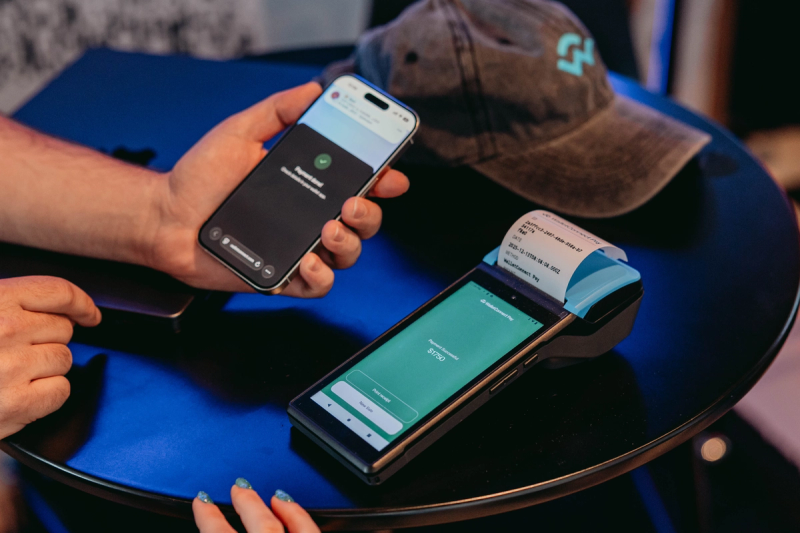
WalletConnect Pay is designed for this exact problem and to remove all the pain points highlighted above. It lets customers pay from the wallets they already use, including with stablecoins, while merchants keep the predictability of settling with familiar payment methods without the fees.
The Merchant Problem: Traditional Rails Don’t Scale Globally
Cards are strong payment methods until customers start pushing into new markets and spending in higher-friction regions.
As merchants expand internationally, common issues emerge:
- Processing and FX fees reduce margins
- Settlement can be slow, impacting cash flow
- Transactions are declined or blocked for reasons you can’t control
- Some customers can’t reliably pay at all, especially cross-border
The above problems result in lost conversion, higher support load, and unpredictable revenue, especially for international commerce.
Merchants don’t need a new payments philosophy. They need a faster, more global way to accept payments, without rebuilding their infrastructure.
Why Stablecoins are the Practical Starting Point
When merchants explore crypto payments, what they’re really looking for is lower fees, global reach, fewer cross-border bottlenecks, and to avoid volatility and balance-sheet exposure.
That’s why stablecoins matter. They’re designed to track fiat value, while using modern rails that can reduce friction in cross-border payments.
Stablecoins like USDC, USDT, EURC, and JPYC are designed to track fiat value while using modern blockchain payment rails. For merchants, stablecoin payments can mean:
- Easier payment for international customers
- A smoother checkout for wallet-native users
- Less dependence on card approval dynamics that vary by region
- More predictable outcomes when cross-border payments are typically inconsistent
In other words, stablecoins can solve real commerce problems, if merchants can accept them in a way that feels safe, familiar, and operationally predictable.
The use cases below highlight some particular situations in which accepting stablecoins through WalletConnect Pay makes a lot of sense.
High-Impact Merchant Use Cases for WalletConnect Pay
A growing segment of global consumers store value in stablecoins because they:
- Move money across borders frequently
- Experience Foreign issuer declines
- Face extra authentication steps
- Mismatches between where the customer is and where the issuer expects them to be
At checkout, they’re forced back onto card rails, and the same friction returns. These purchases are time-sensitive. If payment fails, customers don’t “come back later.”
With WalletConnect Pay, these customers can pay directly from their wallet, without the merchant holding crypto. Merchants can still opt for fiat settlement, meaning the customer uses stablecoins while the business keeps its normal treasury posture and accounting setup
Luxury and High-Ticket Ecommerce Payments
High-ticket baskets are where card friction hurts most. Luxury and premium merchants often see:
- More international customers
- Larger order sizes
- Higher fraud sensitivity from issuers (which can increase declines)
Increased false declines for cross-border purchases When a €2,000+ transaction fails, the impact is immediate: lost revenue, support tickets, and a customer is less likely to retry the payment
WalletConnect Pay helps by adding a second reliable way to complete checkout for customers who prefer wallets or run into card issues, while avoiding FX setbacks and allowing merchants to still settle in fiat.
Cross-border Ecommerce and Hard-to-Reach Markets
For cross-border merchants who sell and ship products internationally, having frictionless payment methods that are accepted across the world helps circumvent:
- Decline rates spike in certain countries
- Extra authentication friction and increased drop-off
- Layered costs from processing, FX, operations add up
- A checkout experience that feels inconsistent across markets
WalletConnect Pay offers a wallet-based checkout that works globally, reducing reliance on card approval systems that differ by issuer and region.
How WalletConnect Pay Works for Merchants
WalletConnect Pay is a payment method merchants can enable through their PSP. Customers pay using their wallets, and merchants get a checkout experience that is fast, clear, and predictable — without crypto infrastructure work.
From a merchant point of view, WalletConnect Pay works like a standard payment method:
Customer pays → payment is confirmed → settlement happens → reconciliation fits existing workflows.
Merchants don’t need to:
- Learn how crypto wallets work
- Manage private keys
- Build or maintain crypto systems
- Hold crypto on the balance sheet
You can choose to settle in fiat, so your business runs the way it does today.
1) Customers choose to pay with their wallet
WalletConnect Pay appears alongside cards and other methods. The customer selects it and pays using the wallet they already use — on mobile, desktop, or in-app.
2) Required checks happen before confirmation
After the customer confirms, WalletConnect Pay handles validation, routing, and compliance screening behind the scenes. Payments are only confirmed once the required checks are complete — so checkout outcomes are clear and consistent.
3) Settlement is predictable
Once approved, funds follow a consistent settlement path. Merchants can settle in fiat or crypto, with transparent fees and any required conversion handled automatically in-flow.
Compliance: handled in the flow, not pushed onto merchants
Compliance is one of the biggest concerns merchants have with crypto payments, and rightly so.
WalletConnect Pay is designed so that merchants don’t have to become compliance experts or rebuild internal processes. It supports key compliance needs, including:
- Address screening for sanctions-related checks
- Collection of required compliance information, including Travel Rule data where applicable
- Working with licensed partners for fiat conversion and settlement
The result: merchants can accept crypto and stablecoin payments while keeping your compliance and operations model intact.
What’s Next
Stablecoins and crypto are no longer niche. They’re increasingly how modern users move value — especially across borders.
The winning merchant strategy isn’t to “become crypto.” It’s to offer modern payment options in a way that stays reliable, reconcilable, and predictable, particularly for merchants who sell luxury goods, handle cross-border commerce, and cater to international customers who already hold stablecoins, merchants
WalletConnect Pay is built exactly for these use cases and more.